
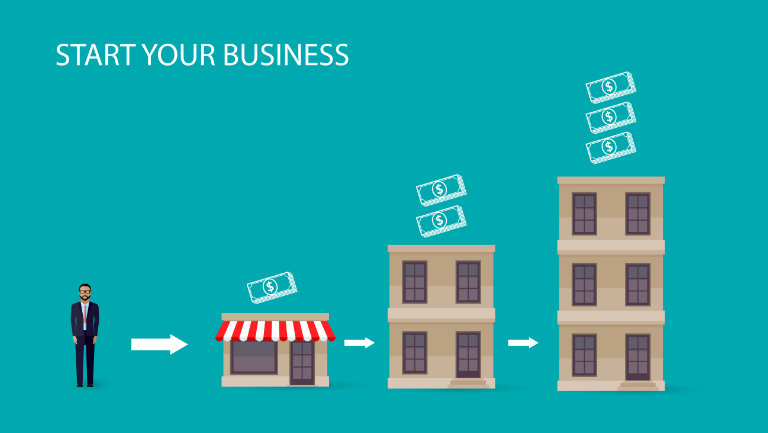
Starting your own business has never been a cake walk. But receiving business loan for new business (finally!) makes it all worth the efforts. Toss the confetti. You’ve reached the START line. Now you’ve the power and the tools to take further steps and embark on a journey of running a successful business.

What comes next is a mix of business fundamentals that can spring you up to the winning podium. Say hi to these five.

Pen your plans

Ideally, you should have your plan ready much before you seek business loan funding. If not, it is never too late to chalk it out – because without a plan, it is merely a dream. You just need an outline of business objectives, strategies, sales plan, marketing approaches and more. At the same time, it is also important to not be married to a plan. Businesses often witness that a best-laid plan can be thrown in a trash bin, even after receiving adequate start-up loan for new business. The key is to gauge how long to stay with the plan and be ready with plan B.

Value your people

Train, trust and treat – are the three golden words to follow when you manage your people.

Train them well to do their jobs

Even if you’ve recruited experienced professionals, who have been in a similar role, in their previous stints – training is the first step. Knowing how you want them to handle their jobs makes them feel more competent, increasingly empowered and proud of their contribution.

Trust your team.

Don’t be a control freak. Delegate tasks effectively and you will get more and better then you expect. Parallelly, set up a structure to allow your employees to contact you without interfering in your own schedule.

Treat them to a reward.

Ignore National Employee Appreciation Day because employee recognition knows no calendar. Make it an important part of your culture all year long to applaud your employees when they are least expecting it.
Market it right

It would have been nice if an ‘Open’ sign on the front door or a website that has finally gone live could fetch you customers. But life is not that easy. Marketing yourself needs a smart tactic to get spotted in the big, bad crowd. It is important to make potential customers aware of something they may not possess and engage them enough so that they listen to your pitch. Remember, without an impactful, efficient and memorable marketing effort, nobody is going to reach out to you out of the blue.

Impress and engage your customers.

Imagine how you would like to be treated and treat your customers a tad better. Your customers are people and not a mere number or a means to an end. They have a personality, preference and the power to be with you or not. So if you add value to their association with you, you can be sure that you’ve built a strong and lasting customer relationship.

De-clutter your business

When you’re fairly settled in your business, relook at every element that shapes it. Be it an employee that is not adding value, a customer who’s draining your resources, or equipment, documents, furniture that no one uses anymore – remove anything that does not make your workspace happier, healthier or more productive. Don’t forget to count-in the mental clutter within your office space and inside your head.
So, when you attain new heights in your business, come back to these vital points. Mentally put the puzzle together to see how all these small pieces add up to your larger goals. And if you need to fund your bigger dreams, reach out to Tribe 3 for easy business loans in India.
Internet of Things

The world is talking about Internet of Things (IOT), workplace or outside everyone is intrigued with this new phenomenon. So what is Internet of Things exactly and why are people so intrigued?

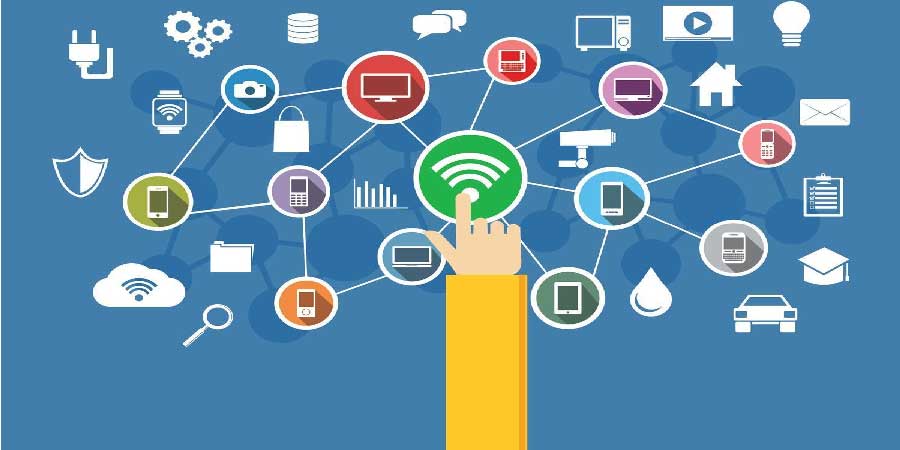
IOT can be defined as a network of devices like cars, home appliances and other items embedded with electronics, software, sensors, actuators and connectivity which enables these objects to connect with each other and exchange data. Each object is unique and interconnected within the same internet infrastructure with other devices.

In simple terms, IOT is the concept of connecting multiple devices under a common internet infrastructure so they can be controlled remotely with little to none manual intervention. From everyday objects like your TV, air conditioner, light bulbs, cell phones to hi-tech machinery in factories almost all can be embedded with software and sensors and controlled automatically using IOT.

Gartner, an analyst firm predicts that by 2020 there will over 26 billion devices that could be integrated using IOT. This very clearly suggests that most of our daily objects at work and home will be integrated with IOT making our lives very comforting. IOT devices have the capability of sharing data with each other, thus creating a lot of data about the choices, likes and dislikes of an individual. This  can help simplify our lives as a lot of our everyday decisions or choices will be made by these devices automatically. For example; your car may send notifications on your cellphone when it requires servicing or something needs repairing, or on a hot day you can set the air conditioner to cool of your home while you are leaving from your work place.

These are simple examples of what large feats are possible once IOT comes in full force. IOT will bring about a lot of changes not just at home but in the overall environment as a whole. Homes, factories, farms, manufacturing units, service providers all that can be connected will be. And this will have a very strong impact on our lives. Automation, reductions in wastage, energy savings and many other such benefits will result in efficient, clean and smart cities and reduce costs and losses on a huge scale.

With so many positives IOT is not only intriguing but also much awaited. However, another aspect that has a serious impact on us with IOT coming in is personal privacy and security. Do we really want so many connected devices sharing our personal information freely to our service providers? How much privacy are we willing to compromise for IOT? With nations always worried about national safety and terrorism do we actually want so many devices collecting our everyday life information and making it openly available? And what about hacking – with IOT being so huge and everything connected a simple breach may result in huge losses. SECURITY is the biggest concern when it comes to IOT and protocols need to be established and followed very strictly if we are to fully enjoy this life changing concept of  IOT.

Discussions on IOT have been going on throughout the globe for many years and the positives and challenges of more and more devices joining under IOT needs to be thought upon. For now all we can do is try to understand more and more about IOT and how it will impact our lives in the near future.

visit us : http://www.webcogitate.com/?utm_source=wordpress

WebCogitate|Artificial Intelligence

Coined by John Mcarthy in 1956 the concept of how Artificial Intelligence (AI) is defined has changed over time. With that said the AI at its core has always been about creating a computer, a machine, a robot or a software program that can think intelligently, just like a human.

AI as a concept is a much broader than merely a smart computer or a robot as it is generally thought to be. Rather AI is about creating a machine/ computer or software which can mimic and function just like an intelligent human brain functions. It also makes sense to base AI on the human brain as we humans are the most capable to observe, understand and act in accordance to our environment.

And that is where the challenge lies, creating an intelligence artificially that can from the information provided or collected, learn, observe, understand and provide solutions and take actions and at the same time it should be intelligent, rational and ethical.

In other words, AI is a branch of computer science whose main purpose is to create machines and software as intelligent as humans.

Aspirations

Broadly AI has two major purposes:

  1. Create expert systems: Systems which exhibit intelligent behavior, learn, demonstrate, explain, advice and provide solutions to its users.
  2. Implement human intelligence in machines: Create systems that understand, think, learn and behave like humans.

To further understand or break down the concept of AI we need to understand that AI as a technology or a science is not an independent one but depends heavily on other branches of science such as computer science, engineering, psychology, mathematics, linguistics and biology.

The ability of a system to calculate, reason, perceive relationship and analogies, learn from experience, store and retrieve information from memory, solve problems, comprehend complex ideas, use natural language fluently, classify, generalize, and adapt new situations. All these abilities together create what we call intelligence. Also, there can be  multiple type of intelligence, linguistic, mathematical-logical, musical, interpersonal, spatial, bodily-kinesthetic to name a few. You can say a system has artificial intelligence when it is equipped with at least one at the most all of these intelligence.

When we consider the above reasoning we realize that AI is no longer a thing of future, it is in the here and the now. Consider automated cars, virtual reality gaming, factory process flows that require no human interventions. Consider “Siri” or “Alexa” personal assistants who understand human speech and understand what we want or need. Look at services like Apple store or Youtube which suggest us various new music and videos based on what we have previously watched or showed interest in.

In closing, there are only small and simple examples of what AI is capable of. As AI grows exponentially it is imperative to consider its long term impact on the environment and human race.

visit us : http://www.webcogitate.com/?utm_source=wordpress

WebCogitate : Micro-services

Micro-service architecture, a word that has grabbed everyone’s attention and is gaining momentum everyday. So, what is micro-service, why does everyone want to shift to it and why do we need it? Let’s understand the concept of micro-service architecture in detail.

The central idea behind micro-services is that some types of applications become easier to build and maintain when they are broken down into smaller, create able pieces which work together. Each component is continuously developed and separately maintained, and the application is then simply the sum of its constituent components. This is in contrast to a traditional, “monolithic” application which is developed all in one piece.

Monolithic Architecture

In a monolithic architecture, we will need just one code base. That code base will have all code related to all modules. For small projects monolithic architecture is preferred. The actual issue arises when the number of modules increases significantly.

Issues that could arise because of monolithic architecture are:

  • It will be difficult to manage the code base
  • Monolithic applications can also be difficult to scale when different modules have conflicting resource requirements
  • Monolithic applications has a barrier to adopt new technologies. Since, changes in framework or languages will effect an entire application, it is extremely expensive in terms of time and cost
  • Another problem with monolithic applications is reliability. Bug in any module (e.g. memory leak) can potentially bring down the entire process. Moreover, since all instances of the application are identical, that bug will impact the availability of the entire application
  • You must redeploy the entire application on each update
  • Impact of a change is usually not very well understood which leads to do extensive manual testing

Micro-service Architecture

Micro-service architecture says that we divide our application in small independent services which works independently and ideally do not communicate with each other. This could be said that A service has no knowledge about B service.

Basically, the idea is to split your application into a set of smaller, interconnected services instead of building a single monolithic application. Each micro-service is a small application that has its own hexagonal architecture consisting of business logic along with various adapters. Some micro-services would expose a REST, RPC or message-based API and most services consume APIs provided by other services.

Also, not only code base, complete micro-service architecture says each service will have its own database and that database access is limited to particular service only.

Benefits of Micro-services

  • It tackles the problem of complexity by decomposing application into a set of manageable services which are much faster to develop, and much easier to understand and maintain
  • It enables each service to be developed independently by a team that is focused on that service
  • It reduces barrier of adopting new technologies since the developers are free to choose whatever technologies make sense for their service and not bounded to the choices made at the start of the project
  • Micro-service architecture enables each micro-service to be deployed independently. As a result, it makes continuous deployment possible for complex applications
  • Micro-service architecture enables each service to be scaled independently

Drawbacks of Micro-services

  • Using micro-service architecture means using distributed system. So, now there will be calls to various services at some facade layer (aggregation layer), where we need to handle RPC and service calls failure
  • Testing the architecture becomes difficult
  • Major issue comes when debugging the issue. To debug the issues, we need something to link calls between different services (done via distributed tracing)
  • In micro-services, our database are also partitioned.If a business requires transactions between various services then we need to take care of distributed transactions (SAGA Pattern)
  • You need to monitor and manage multiple applications

visit us : http://www.webcogitate.com/?utm_source=wordpress

What is SEO – For Beginners

Moved your business online? Have your website ready? Confused how to make it to the list of ‘top searched websites’? Well, one of the solutions to become one of the top searched websites is ‘SEO’ also known as ‘Search Engine Optimization’.

Search Engine Optimization is on-page optimization wherein the website is created with a clear hierarchy and text links to make it easy for the search engines to ‘crawl’ through the site. Search engines are ‘crawlers’ or ‘automated robots’ which go through (crawl) the website and store the relevant information. This process of storing relevant information is called ‘indexing’ and these information are recalled when needed for a search query. When an online search is performed, these search engines go through their database and show the results which match the search queries. Also, it ranks those results as per the popularity of the websites showing relevant results. Hence, ‘relevance and popularity’ are the two things which are influenced by the process of SEO.

To show the ‘relevant’ results to the search query, match your keywords to those queries. Create keyword rich content and URLs. Make a website which is rich in valuable information and its pages clearly describe the content (it is not buried inside JavaScript, Adobe Flash Player).

Search engines assume that more popular a site more useful the information it would contain. To rank these sites in order of their popularity mathematical algorithm is employed by these search engines.

*Following are some of the characteristics of web-pages that tend to rank higher:

  1. Domain-Level Link Features: Based on link/ citation metrics such as quantity of links, trust, domain-level Page Rank, etc.
  2. Page-Level Link Features: Page Rank, trust metrics, quantity of linking root domains ,links, anchor text distribution, etc.
  3. Engagement and Traffic/Query Data: Data SERP engagement metrics, click stream data, visitor traffic / usage signals, etc.
  4. Domain-Level Keyword Usage: Exact-match keyword domains, partial keyword matches, etc.

Search Engine Optimization makes websites understandable for search engines as well as users. It helps the engine find out what each page is about, and its usefulness to the users.